 文章内容
文章内容
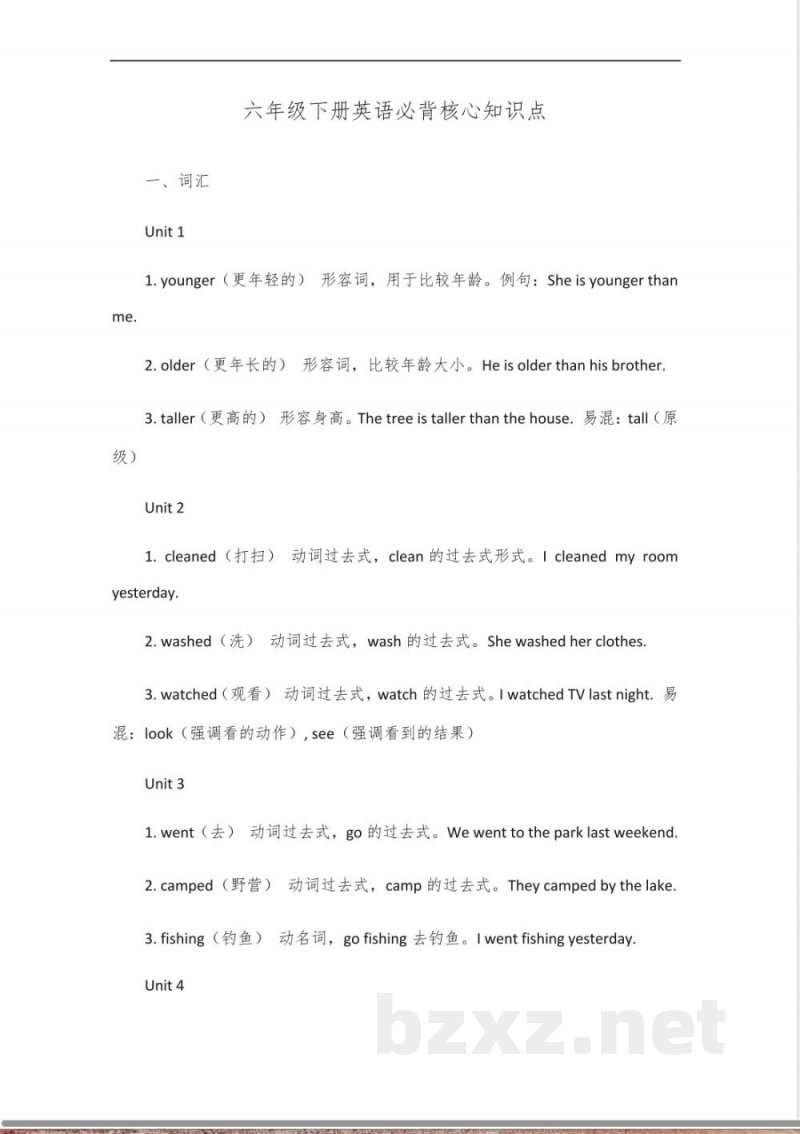
younger(更年轻的)形容词,用于比较年龄。例句:She is younger than her sister.
older(更年长的)形容词,比较年龄大小。例句:He is older than his brother.
taller(更高的)形容身高。例句:The tree is taller than the house.
Unit 2
cleaned(打扫)动词过去式,clean的过去式形式。例句:I cleaned my room yesterday.
washed(洗)动词过去式,wash的过去式。例句:She washed her clothes.
watched(观看)动词过去式,watch的过去式。例句:I watched TV last night.
Unit 3
went(去)动词过去式,go的过去式。例句:We went to the park last weekend.
camped(野营)动词过去式,camp的过去式。例句:They camped by the lake.
fishing(钓鱼)动名词,go fishing去钓鱼。例句:I went fishing yesterday.
Unit 4
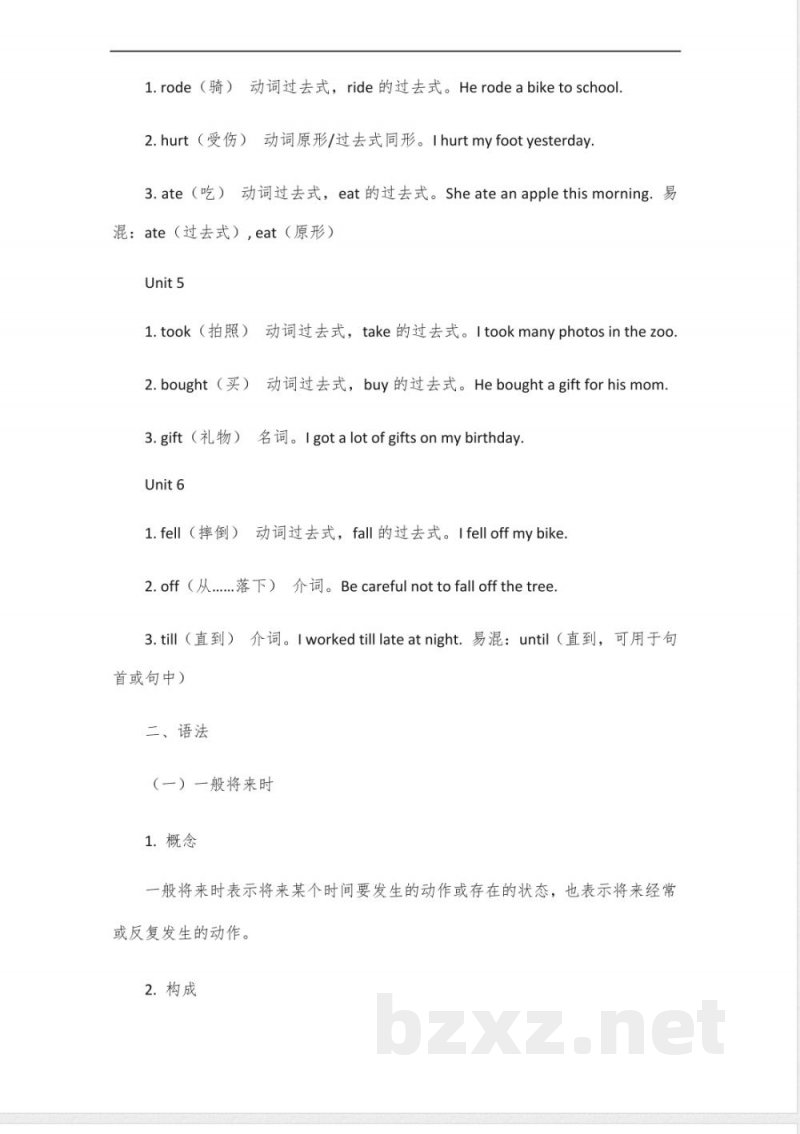
rode(骑)动词过去式,ride的过去式。例句:He rode a bike to school.
hurt(受伤)动词原形/过去式同形。例句:I hurt my foot yesterday.
ate(吃)动词过去式,eat的过去式。例句:She ate an apple this morning.
Unit 5
took(拍照)动词过去式,take的过去式。例句:I took many photos in the zoo.
bought(买)动词过去式,buy的过去式。例句:He bought a gift for his mom.
gift(礼物)名词。例句:I got a lot of gifts on my birthday.
Unit 6
fell(摔倒)动词过去式,fall的过去式。例句:I fell off my bike.
off(从...落下)介词。例句:Be careful not to fall off the tree.
till(直到)介词。例句:I worked till late at night.
语法
一般将来时
概念:一般将来时表示将来某个时间要发生的动作或存在的状态,也表示将来经常或反复发生的动作。
构成:
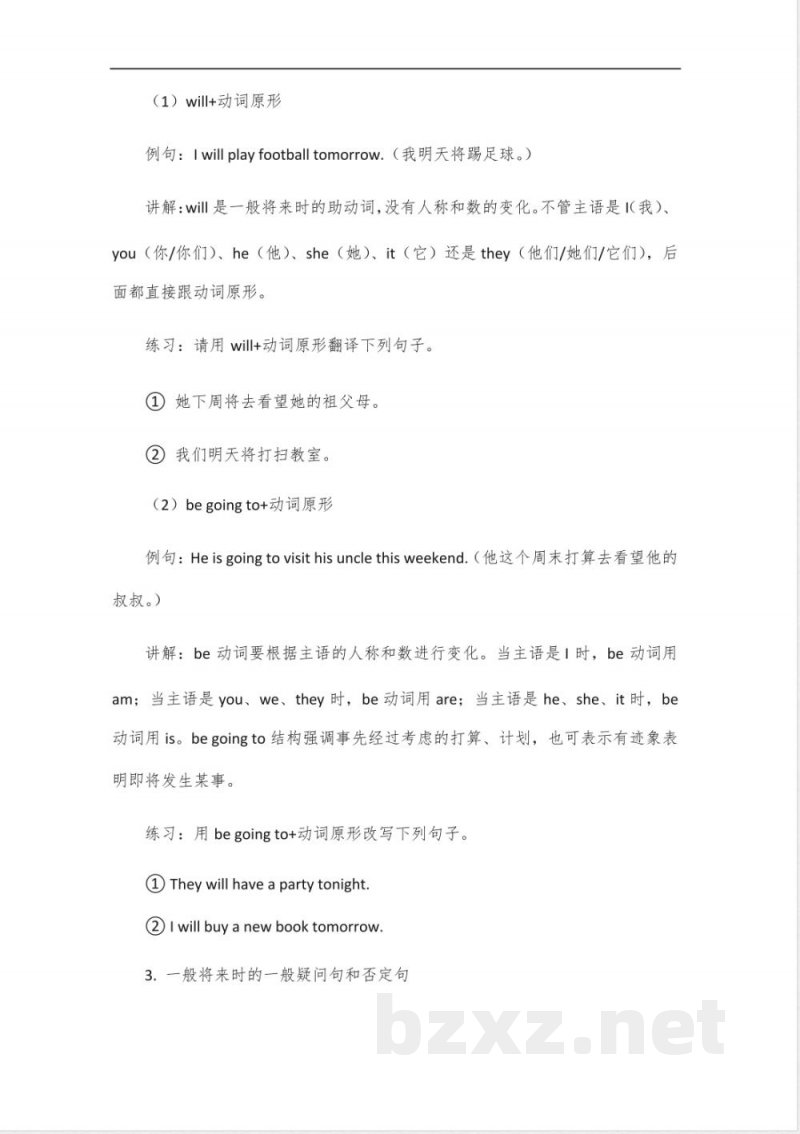
(1) will + 动词原形
例句:I will play football tomorrow.
讲解:will 是一般将来时的助动词,没有人称和数的变化,不管主语是 I、you、he、she、it 还是 they,后面都直接跟动词原形。
练习:请用 will + 动词原形翻译下列句子。她下周将去看望她的祖父母。我们明天将打扫教室。
(2) be going to + 动词原形
例句:He is going to visit his uncle this weekend.
讲解:be 动词要根据主语的人称和数进行变化。begoingto结构强调事先经过考虑的打算、计划,也可表示有迹象表明即将发生某事。
练习:用 be going to + 动词原形改写下列句子:They will have a party tonight. I will buy a new book tomorrow.
一般将来时的一般疑问句和否定句
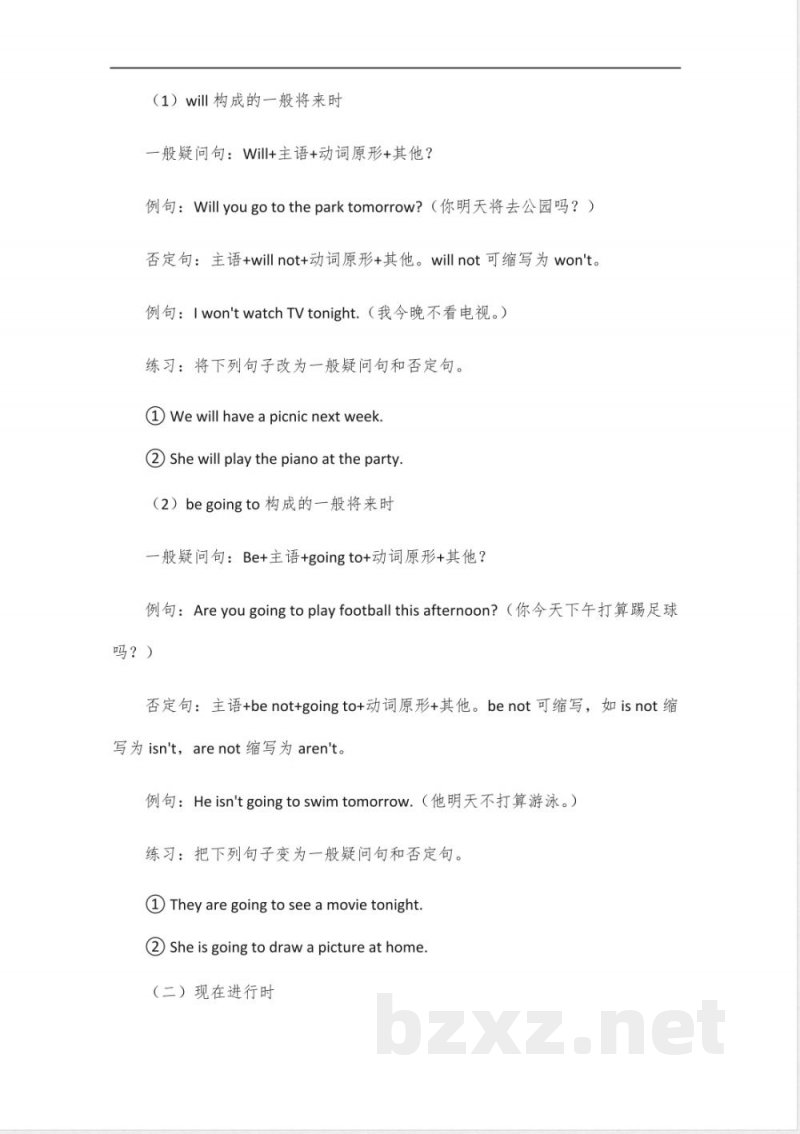
(1) will 构成的一般将来时
一般疑问句:Will + 主语 + 动词原形 + 其他?例句:Will you go to the park tomorrow?
否定句:主语 + will not + 动词原形 + 其他。will not 可缩写为 won't。例句:I won't watch TV tonight.
(2) be going to 构成的一般将来时
一般疑问句:Be + 主语 + going to + 动词原形 + 其他?例句:Are you going to play football this afternoon?
否定句:主语 + be not + going to + 动词原形 + 其他。be not 可缩写,如 is not 缩写为 isn't,are not 缩写为 aren't。例句:He isn't going to swim tomorrow.
说明:本文档为学习资料,仅供教学与自学使用,资源免费下载,不含任何诱导下载或捆绑程序。
小提示:上面此文档内容仅展示完整文档里的部分内容, 若需要下载完整文档请 点击免费下载完整文档 。