标准信息
STANDARD INFORMATION- 标准编号
- ACI 221.1R-98
- 所属分类
- ACI 美国混凝土学会标准
- 文件语言
- 英语
- 文件格式
- 文件页数
- 6 页
- 文件大小
- 5.64 MB
· 更新:
标准简介
OVERVIEW中文简介
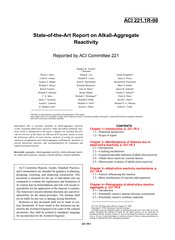
标准 ACI 221.1R-98 的预览内容
English summary
Preview of standard ACI 221.1R-98
以上为根据文件整理的内容简介。
标准内容预览
DOCUMENT PREVIEWWe need answer user's request: produce HTML fragment only. Need analyze image and construct HTML. Need obey strict constraints. Need output only HTML, no explanation. Need likely page starts with h2. Page content: It's a two-column layout? Left column has chapter list (red headings and subitems), right column has continuation of chapter list? Actually top right: 11.2—Evaluation, 11.3—Repair methods and materials, Chapter 12—References... Then CHAPTER 1—INTRODUCTION and paragraphs. The page is two-column. Need represent layout? Could use table class layout-columns with two td. But content includes headings and lists. Need only allowed tags. Could use table layout-columns to preserve two columns. But table only allowed td/th with rowspan/colspan? It says only td/th with rowspan/colspan values 1-100. But table class layout-columns example uses
| 左栏 | 右栏 |
. If using table, first element must be h2? Requirement: 每页输出必须以 开头(页面内标题). So cannot start with table. Need maybe first h2 for page title? The page has no main title? It has "CHAPTER 1—INTRODUCTION" in right column. But left column starts with Chapter 5 list. The page top header ignored. Need output must start with h2. Could start with Chapter 5—Measures to prevent alkali-silica reactivity, p. 221.1R-9
? But that's a heading in left column. However page content is two columns. If we start with h2 then table? But table after h2 would break two-column? Could put h2 inside first td? But output must start with h2, so first tag h2. Could do:
Chapter 5—Measures to prevent alkali-silica reactivity, p. 221.1R-9
Chapter 5—Measures to prevent alkali-silica reactivity, p. 221.1R-9
? But that's a heading in left column. However page content is two columns. If we start with h2 then table? But table after h2 would break two-column? Could put h2 inside first td? But output must start with h2, so first tag h2. Could do:Chapter 5—Measures to prevent alkali-silica reactivity, p. 221.1R-9
| ... rest left ... | ... right ... |
But then left column first heading outside table, rest inside. That may be okay? But visual not perfect. Alternatively start with h2 for CHAPTER 1—INTRODUCTION? But left column content before? The requirement only output starts with h2, not necessarily first visual. Could start with
CHAPTER 1—INTRODUCTION
then table with left and right? But then right column content after h2? Hmm.Need decide best representation. Since two-column layout, use table class layout-columns. But first element must h2. Could put h2 inside first td? Not allowed because output starts with table. Could use h2 before table as page title? There is no page title. Could use
221.1R-2
? But page number/header ignored? It says page header ignored, page number ignored. But output must start with h2 (page内标题). Could use first visible heading as h2. The first visible heading in left column is red "Chapter 5—Measures to prevent alkali-silica reactivity, p. 221.1R-9". So start with that h2. Then table for remaining two columns? But left column has that heading and list; right column has 11.2 etc. If we put heading outside, left td starts with list items. Could be acceptable.Need preserve numbering. Lists: Could use
for each line? Allowed p. Could use ul/li? Allowed but no attributes. But numbering is manual (5.1—Overview). Could use p indent? The list items are indented. Use
5.1—Overview
etc. Chapter headings red but no color allowed. Use h3? The chapter headings are bold red. Could use or ? Page内标题: first page h2, subsequent h2/h3. Since this is page 2? It says page number placeholder 2. It's likely page 2 of document. But page content includes Chapter 1 heading. Need use h2 for page title? Maybe use h2 for CHAPTER 1—INTRODUCTION? But if output starts with Chapter 5 heading, use h2? The rule: 每页输出必须以 开头(页面内标题). It doesn't say all headings h2. Could use h2 for first heading. Then other chapter headings h3? But Chapter 1—INTRODUCTION is major heading, maybe h2. But if first h2 is Chapter 5, then Chapter 1 later h2? Could be okay. But visual hierarchy: Chapter headings are major. Could use h3 for chapter list headings? Hmm.
Need maybe represent as two columns with table. Inside td, use h3 for chapter headings? But first output h2 maybe "Chapter 5..." then table. But then inside left td, subsequent chapter headings h3. Right td: 11.2 etc as p indent, Chapter 12 heading h3, then CHAPTER 1—INTRODUCTION h2? But if inside table after h2? Could be okay. But table class layout-columns should contain two columns. If first h2 outside, table only contains rest. But right column includes top items before Chapter 1. Need include them.
Alternative: Use no table, just sequential content. But two-column layout should be represented with table class layout-columns. The instruction says two-column layout -> table. So likely use table. But first element h2 conflict. Could put h2 inside first td? Not possible if output starts with table. Could use h2 before table as a page-level heading that is not visually first? Maybe use
221.1R-2
? But header ignored? It says page header ignored, but page number? "221.1R-2" is page header? Top left is page number? It is page number? It says page number bottom ignored, but top left "221.1R-2" maybe page number/header. Should ignore. Could use ACI COMMITTEE REPORT
? Header ignored. Not good.
Maybe the requirement "每页输出必须以
开头(页面内标题)" means if page has a title, start with h2. If no title? But must. Could start with first heading. So okay.
Need ensure no forbidden tags. Table layout-columns: allowed. But table inside can have tr/td. No thead needed. Need no style. Need no nbsp. Use em dash — as text. Need preserve line breaks? Use p for each line. For lists, p indent. For paragraphs, p. For formula? There is formula: percent Na2Oe = percent Na2O + 0.658 × percent K2O. It is inline in paragraph. Could use ... for inline formula? Rule: 行内公式 → .... The formula is inline: (percent Na2Oe = percent Na2O + 0.658 × percent K2O). Could wrap entire formula in em. Need subscripts? Na2Oe, Na2O, K2O. Allowed sub? Could use sub for 2? But OCR text likely Na2Oe. Could use Na2Oe? Allowed sub. But original has Na2Oe with subscript? In image: Na2Oe = percent Na2O + 0.658 × percent K2O. The 2 and e maybe subscript? It shows Na2Oe with 2 and e subscript? Actually "Na2Oe" likely Na₂Oₑ. Could use sub tags: Na2Oe = percent Na2O + 0.658 × percent K2O. Allowed sub. But if not sure? It's clear. Use sub. Need no style.
Need handle "Alkali-silica reactivity" italic in 1.1.1: "1.1.1 Alkali-silica reactivity—Alkali-silica reactivity (ASR) was first recognized..." The phrase "Alkali-silica reactivity" appears italic. Use Alkali-silica reactivity. Need preserve.
Need maybe use for bold headings? Allowed. But headings already h2/h3. Red chapter headings maybe bold. Could use h3. The top right "Chapter 12—References, p. 221.1R-27" red bold. Use h3. "CHAPTER 1—INTRODUCTION" bold centered? It is centered in right column. Could use ? Allowed class align-center on h2? It says only these class, likely can apply to any? Example p class. It doesn't restrict. Could use CHAPTER 1—INTRODUCTION
. But output must start with h2; if we start with Chapter 5 h2, then later h2 align-center. Is that okay? Yes.
Need maybe use
2
at end.
Need consider table layout: If we use table with two td, inside td can contain h2? But first h2 outside. Could do:
Chapter 5—Measures to prevent alkali-silica reactivity, p. 221.1R-9
5.1—Overview
...
Chapter 6—...
...
11.2—Evaluation
11.3—Repair methods and materials
Chapter 12—References, p. 221.1R-27
12.1—Standards documents
12.2—Cited references
CHAPTER 1—INTRODUCTION
...
...
2
But first h2 outside left column, then table left td starts with 5.1. This splits left column. Could instead put first h2 inside left td but output starts with h2? Could use h2 before table as a hidden? No. Could use table with first td containing h2 but output starts with table, violates. Could use
then table with colspan? Maybe table first row has td colspan=2 containing h2? But output starts h2 outside. Hmm.
Maybe use table after h2 but include all left content in first td, and right content in second td. The h2 outside is not in table, but okay. Could also make table with two columns and first row:
...
Could use
as first element and then table with two columns where first td repeats? No repeat not allowed. Could put h2 outside and then table with left td containing only list after heading. Acceptable.
But maybe better: Use
CHAPTER 1—INTRODUCTION
first, then table with left column chapter list and right column continuation? But then right column top 11.2 etc before Chapter 1? If h2 first, then table left includes Chapter 5 list, right includes 11.2, Chapter 12, then paragraphs after h2? But h2 outside before table, then right td would need not repeat h2. Could put paragraphs in right td. But visual: h2 appears before table, not in right column. Not ideal.
Could use no table and just sequential: left list then right list then chapter 1. But two-column layout instruction. However if table causes first h2 issue, maybe sequential is acceptable? It says two-column layout -> table. Should use table.
Need maybe use
Chapter 5...
......
but output starts with table. Could we put h2 before table and then table with first td empty? No.
Maybe requirement "每页输出必须以
开头" can be satisfied by putting h2 inside table? No, output starts with
. So no.
Could use
as first element and then use CSS? No style. Could use table with first row containing h2? no.
Maybe use
then
with two columns, but include the h2 text again? Not allowed repeat. Could not repeat.
Maybe use
for page title not visible, e.g. 221.1R-2
then table with all content. But header/page number ignored? It says page header ignored, but maybe page number top left is not bottom page number? It says page number (页面底部的数字) ignore. Top left "221.1R-2" is page number? It is page number in header? It might be page number, but not bottom. Filter says page header ignored. So shouldn't output. But if we output as h2, violates filter? It says page header ignore. So no.
Could use
ACI COMMITTEE REPORT
? Header ignore. No.
Could use
Chapter 5...
and table. That's likely best.
Need ensure table class layout-columns only class. Could table have no border. Fine.
Need maybe use
for subitems. For chapter headings inside table, use h3. But first h2 outside. For Chapter 12 heading in right column, use h3. For CHAPTER 1—INTRODUCTION, use h2 align-center. But if h2 inside table after h3? okay.
Need preserve "Chapter 5—Measures to prevent alkali-silica reactivity, p. 221.1R-9" as h2. It is red bold. Good.
Need include all left chapter headings:
Chapter 5 heading outside h2.
Left td:
5.1—Overview
5.2—Limiting moisture
5.3—Aggregate selection
5.4—Minimizing alkalis
5.5—Cement selection
5.6—Finely divided materials other than portland cement
5.7—Testing for the effectiveness of pozzolans or slags
5.8—Alkali content of concrete
5.9—Chemical admixtures
5.10—Other methods
Chapter 6—Methods to evaluate potential for expansive alkali-silica reactivity, p. 221.1R-14
6.1—Introduction
6.2—Field service record
6.3—Common tests to evaluate potential alkali-silica reactivity of aggregates
6.4—Less common tests to evaluate potential alkali-silica reactivity of aggregates
6.5—Tests to evaluate alkali-silica reactivity in hardened concrete
6.6—Summary of testing
Chapter 7—Manifestations of distress due to alkali-carbonate reactivity, p. 221.1R-19
7.1—Overview
7.2—Field indicators
7.3—Microscopic indicators
7.4—Role of environment, structure geometry, and restraint on distress development
Chapter 8—Alkali-carbonate reactivity mechanisms, p. 221.1R-21
8.1—Overview
8.2—Characteristics of alkali-carbonate reactive rocks
8.3—Mechanism of reaction and expansion
Chapter 9—Measures to prevent alkali-carbonate reactivity, p. 221.1R-23
9.1—Introduction
9.2—Aggregate selection
9.3—Cement
9.4—Pozzolans
9.5—Moisture
Chapter 10—Methods to evaluate potential for expansive alkali-carbonate reactivity, p. 221.1R-23
10.1—Introduction
10.2—Field service record
10.3—Petrographic examination
10.4—Rock cylinder test
10.5—Concrete prism tests
10.6—Other procedures
10.7—Evaluation of new aggregate sources
Chapter 11—Evaluation and repair of structures affected by alkali-aggregate reactivity, p. 221.1R-25
11.1—Introduction
Right td:
11.2—Evaluation
11.3—Repair methods and materials
Chapter 12—References, p. 221.1R-27
12.1—Standards documents
12.2—Cited references
CHAPTER 1—INTRODUCTION
In many parts of the world, precautions must be taken to avoid excessive expansion due to alkali-aggregate reactivity (AAR) in many types of concrete construction. AAR may involve siliceous aggregates (alkali-silica reactivity, ASR) or carbonate aggregates (alkali-carbonate reactivity, ACR), and failure to take precautions may result in progressive deterioration, requiring costly repair and rehabilitation of concrete structures to maintain their intended function.
Extensive knowledge is available regarding the mechanisms of the reactions, the aggregate constituents that may react deleteriously, and precautions that can be taken to avoid resulting distress. However, deficiencies still exist in our knowledge of both ASR and ACR. This is particularly true with respect to the applicability of test methods to identify the potential for reactivity, methods to repair affected concrete, and means to control the consequences of the reactions in existing structures.
Intensive research has been conducted to develop this needed information. As a result, concrete structures can now be designed and built with a high degree of assurance that excessive expansion due to AAR will not occur and cause progressive degradation of the concrete.
This state-of-the-art report provides information for those involved with the design and construction of concrete, to make them aware of the factors involved in AAR and the means that are available to control it.
1.1—Historical perspective
1.1.1 Alkali-silica reactivity—Alkali-silica reactivity (ASR) was first recognized in concrete pavement in California by Stanton (1940, 1942) of the California State Division of Highways. Stanton's early laboratory work demonstrated that expansion and cracking resulted when certain combinations of high-alkali cement and aggregate were combined in mortar bars stored in containers at very high relative humidity. Two important conclusions are drawn from this work: First, expansions resulting from ASR in damp mortar bars were negligible when alkali levels in cement were less than 0.60 percent, expressed as equivalent sodium oxide (percent Na2Oe = percent Na2O + 0.658 × percent K2O). A second conclusion was that the partial replacement of high-alkali cement with a suitable pozzolanic material prevented excessive expansions. Thus, foundations for the engineering control of the reaction were developed. This work also formed the basis for ASTM C 227, the mortar-bar test procedure.
Based on Stanton's work, the U.S. Bureau of Reclamation (Meissner, 1941) conducted investigations of abnormal cracking in concrete dams. Meissner's findings generally corroborated those of Stanton, and lent further credence to
Need maybe include "1.1.1" as heading? It is a subheading with italic phrase. Could use
1.1.1 Alkali-silica reactivity—...
. Good.
Need check line "1.1—Historical perspective" bold. Use h3.
Need maybe use
for 1.1.1? It is indented? In image, 1.1.1 is indented under 1.1. Could use
1.1.1 ...
. But it's a paragraph with heading. Use indent.
Need maybe use
for 11.2 etc. Good.
Need ensure no continuous spaces. Use single spaces.
Need no Markdown.
Need maybe table with
... ... Potential issue: table class layout-columns with h2 inside td? Allowed? Tags allowed. class only on table. Good.
Potential issue: first h2 outside table then table. The table's first td starts with p indent. The h2 outside is not in left column but okay. Could maybe use
Chapter 5...
then table with left td containing all left content including that heading? Can't repeat. Could instead put h2 outside and left td starts with 5.1. Good.
But maybe better to start with
CHAPTER 1—INTRODUCTION
then table with left column all chapter list and right column top list and paragraphs? But then Chapter 1 heading outside before table, not in right column. Which is more important? The page's main content is Chapter 1 Introduction. The left column is table of contents continuation. The first visible heading in reading order? In two-column, left column first. But page title maybe CHAPTER 1—INTRODUCTION. Requirement page内标题 maybe main title. Could start with h2 CHAPTER 1—INTRODUCTION. Then table with left and right. But right td would need not include h2, but include paragraphs after. However top right list before Chapter 1 would appear after h2, not correct. Could put top right list in right td before paragraphs, but h2 outside before table means it appears before top right list. Not ideal.
Could use h2 for Chapter 5 because it's first visible. Good.
Need maybe use h2 for Chapter 5, h3 for other chapter headings, h2 for CHAPTER 1. That's okay.
Need maybe use for red chapter headings? Headings enough.
Need check if "Chapter 5—Measures to prevent alkali-silica reactivity, p. 221.1R-9" should be h2 or h3? Since first page heading h2. Good.
Need maybe include "Chapter 11—Evaluation and repair of structures affected by alkali-aggregate reactivity, p. 221.1R-25" in left td. Then right td starts 11.2. Good.
Need maybe include "Chapter 12—References, p. 221.1R-27" in right td. Good.
Need maybe include "CHAPTER 1—INTRODUCTION" centered. Use h2 class align-center. But if h2 inside table, okay.
Need maybe include "1.1—Historical perspective" as h3. Good.
Need maybe include "1.1.1 Alkali-silica reactivity—Alkali-silica reactivity (ASR)..." as p indent. The italic phrase is "Alkali-silica reactivity" after 1.1.1. Use em.
Need maybe include "Alkali-silica reactivity" in first paragraph? Not italic. Good.
Need maybe include "alkali-aggregate reactivity (AAR)" etc.
Need check OCR exact:
Top left: "221.1R-2" ignore.
Top right: "ACI COMMITTEE REPORT" ignore.
Left red: "Chapter 5—Measures to prevent alkali-silica reactivity, p. 221.1R-9"
Subitems:
5.1—Overview
5.2—Limiting moisture
5.3—Aggregate selection
5.4—Minimizing alkalis
5.5—Cement selection
5.6—Finely divided materials other than portland cement
5.7—Testing for the effectiveness of pozzolans or slags
5.8—Alkali content of concrete
5.9—Chemical admixtures
5.10—Other methods
Red: Chapter 6—Methods to evaluate potential for expansive alkali-silica reactivity, p. 221.1R-14
6.1—Introduction
6.2—Field service record
6.3—Common tests to evaluate potential alkali-silica reactivity of aggregates
6.4—Less common tests to evaluate potential alkali-silica reactivity of aggregates
6.5—Tests to evaluate alkali-silica reactivity in hardened concrete
6.6—Summary of testing
Red: Chapter 7—Manifestations of distress due to alkali-carbonate reactivity, p. 221.1R-19
7.1—Overview
7.2—Field indicators
7.3—Microscopic indicators
7.4—Role of environment, structure geometry, and restraint on distress development
Red: Chapter 8—Alkali-carbonate reactivity mechanisms, p. 221.1R-21
8.1—Overview
8.2—Characteristics of alkali-carbonate reactive rocks
8.3—Mechanism of reaction and expansion
Red: Chapter 9—Measures to prevent alkali-carbonate reactivity, p. 221.1R-23
9.1—Introduction
9.2—Aggregate selection
9.3—Cement
9.4—Pozzolans
9.5—Moisture
Red: Chapter 10—Methods to evaluate potential for expansive alkali-carbonate reactivity, p. 221.1R-23
10.1—Introduction
10.2—Field service record
10.3—Petrographic examination
10.4—Rock cylinder test
10.5—Concrete prism tests
10.6—Other procedures
10.7—Evaluation of new aggregate sources
Red: Chapter 11—Evaluation and repair of structures affected by alkali-aggregate reactivity, p. 221.1R-25
11.1—Introduction
Right top:
11.2—Evaluation
11.3—Repair methods and materials
Red: Chapter 12—References, p. 221.1R-27
12.1—Standards documents
12.2—Cited references
Center bold: CHAPTER 1—INTRODUCTION
Paragraphs as above.
Need check paragraph 1: "In many parts of the world, precautions must be taken to avoid excessive expansion due to alkali-aggregate reactivity (AAR) in many types of concrete construction. AAR may involve siliceous aggregates (alkali-silica reactivity, ASR) or carbonate aggregates (alkali-carbonate reactivity, ACR), and failure to take precautions may result in progressive deterioration, requiring costly repair and rehabilitation of concrete structures to maintain their intended function."
Paragraph 2: "Extensive knowledge is available regarding the mechanisms of the reactions, the aggregate constituents that may react deleteriously, and precautions that can be taken to avoid resulting distress. However, deficiencies still exist in our knowledge of both ASR and ACR. This is particularly true with respect to the applicability of test methods to identify the potential for reactivity, methods to repair affected concrete, and means to control the consequences of the reactions in existing structures."
Paragraph 3: "Intensive research has been conducted to develop this needed information. As a result, concrete structures can now be designed and built with a high degree of assurance that excessive expansion due to AAR will not occur and cause progressive degradation of the concrete."
Paragraph 4: "This state-of-the-art report provides information for those involved with the design and construction of concrete, to make them aware of the factors involved in AAR and the means that are available to control it."
Heading: "1.1—Historical perspective"
Paragraph: "1.1.1 Alkali-silica reactivity—Alkali-silica reactivity (ASR) was first recognized in concrete pavement in California by Stanton (1940, 1942) of the California State Division of Highways. Stanton's early laboratory work demonstrated that expansion and cracking resulted when certain combinations of high-alkali cement and aggregate were combined in mortar bars stored in containers at very high relative humidity. Two important conclusions are drawn from this work: First, expansions resulting from ASR in damp mortar bars were negligible when alkali levels in cement were less than 0.60 percent, expressed as equivalent sodium oxide (percent Na2Oe = percent Na2O + 0.658 × percent K2O). A second conclusion was that the partial replacement of high-alkali cement with a suitable pozzolanic material prevented excessive expansions. Thus, foundations for the engineering control of the reaction were developed. This work also formed the basis for ASTM C 227, the mortar-bar test procedure."
Need maybe "Stanton's" apostrophe. Use straight apostrophe? Original curly? Could use ' or ’? Allowed. Use straight? Fine.
Paragraph: "Based on Stanton's work, the U.S. Bureau of Reclamation (Meissner, 1941) conducted investigations of abnormal cracking in concrete dams. Meissner's findings generally corroborated those of Stanton, and lent further credence to"
Need maybe no period at end because page cuts. Keep as is.
Need maybe use
for 1.1.1 paragraph. It is indented. Good.
Need maybe use
for 11.2 etc. Good.
Need maybe use
for all TOC subitems. Good.
Need maybe use
for 12.1 etc. Good.
Need maybe use
for 1.1.1? yes.
Need maybe use
for 1.1? It's heading, use h3.
Need maybe use
for 1.1—Historical perspective. Good.
Potential issue: h2 inside table after h3? okay.
Potential issue: table layout-columns with many block elements inside td. Allowed.
Potential issue: class align-center on h2. Allowed? It says only these class, not only p. Should be okay. If not, could use
CHAPTER 1—INTRODUCTION
but heading required? Page内标题 maybe h2. Use h2 class align-center.
Potential issue: first h2 outside table and later h2 inside table. Multiple h2 okay.
Potential issue: "Chapter 5..." is a TOC entry, not page title. But okay.
Could we instead start with
CHAPTER 1—INTRODUCTION
and then table with left and right, but include top right list before paragraphs? Let's evaluate which better satisfies "页面内标题". The page's main title is CHAPTER 1—INTRODUCTION. The left column is TOC. If output starts with Chapter 5 TOC heading, maybe not main title. But requirement says page内标题, could be any heading. The example starts with "2 Scope" which is main section. Here main section is CHAPTER 1—INTRODUCTION. But it's in right column. Could start with h2 CHAPTER 1—INTRODUCTION, then table with left column TOC and right column continuation? But then the top right TOC entries (11.2, Chapter 12) would appear after h2 if in right td, not before. Could put them in right td before paragraphs but after h2 outside. Not faithful. Could put h2 inside right td but output starts table. Not allowed. Could use h2 outside as a page title and then table with all content, but then h2 appears before all content, not visual. Maybe acceptable? The requirement prioritizes start with h2 over exact layout? It says highest priority. So maybe choose main title h2 first, then table with all content (including maybe repeat? no). But if h2 outside, right td should not include h2. Then right td starts with 11.2 etc, then paragraphs. That places CHAPTER 1 heading before 11.2, not visual. But maybe okay? Hmm.
Could use
CHAPTER 1—INTRODUCTION
then table with left td all left TOC, right td top TOC and paragraphs. This starts with main title. But the top TOC entries appear after title, not before. However reading order in two-column maybe left column then right column; title is in right column after top TOC. Hard.
Could use
Chapter 5...
then table. This preserves left column first. I think better.
Need maybe use table with two columns but first h2 outside. Could maybe make first h2 part of left column by putting table after and left td starts with 5.1. It's okay.
Need maybe include "Chapter 5" heading in left td? We already have outside. Good.
Need maybe use
for Chapter 5? But first must h2. Good.
Need maybe use
for Chapter 12 and Chapter 1? Chapter 1 is main, use h2. Good.
Need maybe use
for 1.1. Good.
Need maybe use
for 1.1.1. Good.
Need maybe use for italic "Alkali-silica reactivity". Good.
Need maybe use for chemical formulas. Good.
Need maybe use for inline formula? The formula is inside parentheses. Could wrap entire formula in .... But also sub tags inside em. Allowed. E.g. percent Na2Oe = percent Na2O + 0.658 × percent K2O. But original formula not italic? Rule says inline formula -> em. Use em. Need ensure no spaces around =? Original has spaces. Use single spaces. Good.
Need maybe use × character. Good.
Need maybe use "Na2Oe" with sub e. Good.
Need maybe use "ASTM C 227" with space. Good.
Need maybe no footnotes.
Need final output only HTML. Ensure no comments.
Let's consider if table with class layout-columns and no thead is allowed. Yes.
Need maybe ensure all tags closed. Use
...
...
Need maybe no blank lines? Fine.
Potential issue: The first h2 outside table then table. The table's left td starts with p indent. The h2 is not inside table, so two-column layout not fully represented. Could we instead use
then
? No. Could use table with first row two td, but h2 outside. Fine.
Alternative: Use
Chapter 5...
then ... left ... ... right ...
. Good.
Need maybe include all left content in left td. Good.
Need maybe include right top content in right td. Good.
Need maybe include paragraphs in right td. Good.
Need maybe include final page number p align-center 2. Good.
Double-check forbidden: no style, no nbsp, no markdown, no h1, no div. Good.
Need maybe use ? Not necessary.
Need maybe use or ? Not necessary.
Need maybe use or ? no.
Need maybe use
? no.
Need maybe use
? no.
Need maybe use
/
? Could use p indent instead. Allowed. Good.
Need maybe use
? no.
Need maybe use ? no.
Need maybe use
? no.
Need maybe use
? no.
Need maybe use
? no.
Need maybe use ? no.
? Allowed class align-center on h2? It says only these class, likely can apply to any? Example p class. It doesn't restrict. Could use CHAPTER 1—INTRODUCTION
. But output must start with h2; if we start with Chapter 5 h2, then later h2 align-center. Is that okay? Yes.
Need maybe use
2
at end.5.1—Overview
...
Chapter 6—...
...
11.2—Evaluation
11.3—Repair methods and materials
Chapter 12—References, p. 221.1R-27
12.1—Standards documents
12.2—Cited references
CHAPTER 1—INTRODUCTION
...
...
...
Chapter 5...
...Could use
as first element and then use CSS? No style. Could use table with first row containing h2? no.
Maybe use
then
| ... | ... | |||
|
... |
... |
Need maybe no blank lines? Fine.
Potential issue: The first h2 outside table then table. The table's left td starts with p indent. The h2 is not inside table, so two-column layout not fully represented. Could we instead use
then
| ? No. Could use table with first row two td, but h2 outside. Fine.
Alternative: Use Chapter 5...then
Need maybe include all left content in left td. Good. Need maybe include right top content in right td. Good. Need maybe include paragraphs in right td. Good. Need maybe include final page number p align-center 2. Good. Double-check forbidden: no style, no nbsp, no markdown, no h1, no div. Good. Need maybe use ? Not necessary.
Need maybe use or ? Not necessary.
Need maybe use or Need maybe use Need maybe use Need maybe use Need maybe use Need maybe use ? no.
Need maybe use Need maybe use Need maybe use Need maybe use ? no.
| ||||
预览内容由文件识别整理,表格、公式及文字请以原始文件为准。
原文图片预览
PAGE IMAGES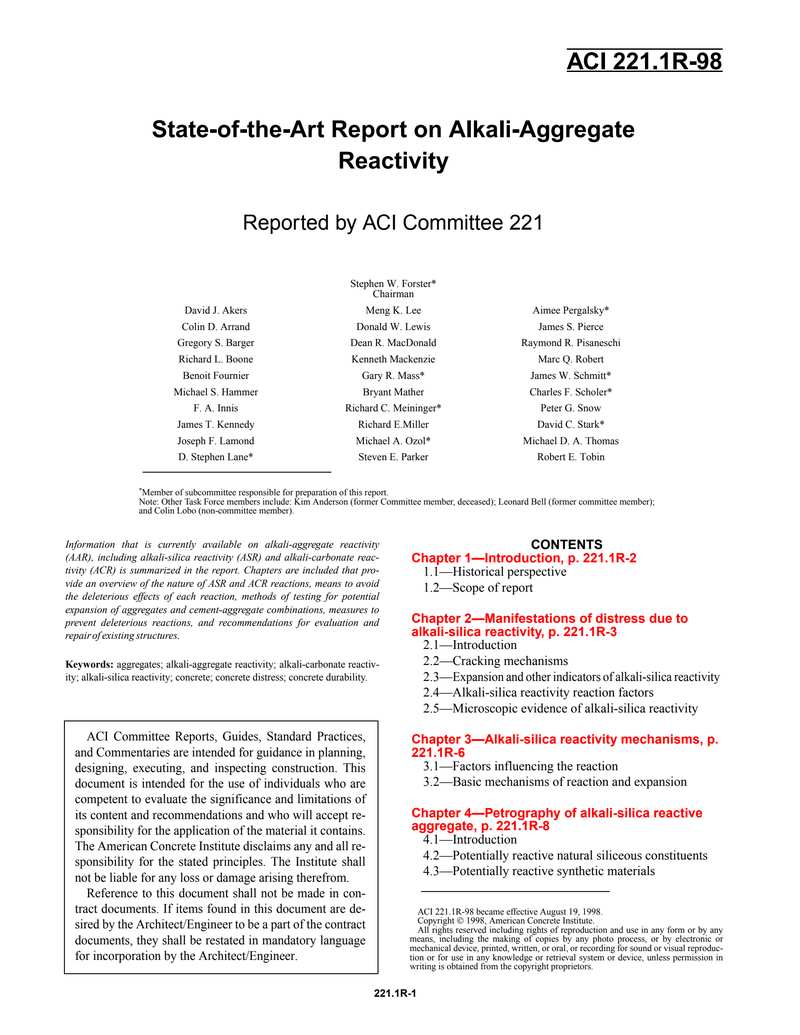

下载标准文件
ACI 221.1R-98
英语 · PDF · 6 页 · 5.64 MB